

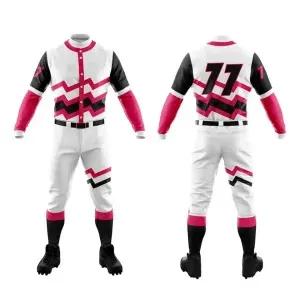
Baseball puts a uniform through a kind of physical stress most team sports simply don't involve. A player sliding into second base drags fabric across dirt and turf under real weight and friction, repeatedly, over a season — abrasion that a basketball jersey or a soccer kit never has to withstand in the same way. That single difference reshapes the fabric brief for a baseball uniform from the ground up, well before color, branding, or fit even enter the conversation.
Fabric Weight and Durability: Built for Sliding, Not Just Movement
Double-knit polyester has become the standard fabric for modern baseball uniforms specifically because of its abrasion resistance — a tighter, more stable knit structure than the lighter mesh common in basketball or the woven technical fabric used in soccer kits, built to survive repeated contact with dirt, grass, and the ground itself without tearing or pilling prematurely. Fabric weight sits meaningfully heavier than what a basketball or running jersey would use, trading some breathability for the durability a season of sliding actually demands.
This weight and construction difference is worth stating explicitly to a supplier rather than assuming a factory's standard "team jersey" fabric covers baseball's needs by default — a fabric built for a sport without sliding contact genuinely isn't engineered for what a baseball uniform goes through.
Button-Front vs. Pullover: A Construction Choice With Real History Behind It
Traditional baseball jerseys use a full button-front construction, a more structured and formal look closely tied to the sport's visual identity, requiring button hardware and a more involved placket construction than a simple pullover. Pullover-style baseball jerseys, lighter and less expensive to produce, have become more common at youth and recreational levels where the traditional button-front look matters less than cost and simplicity.
Button-front construction adds both cost and production complexity — sourcing matching buttons, constructing a clean placket that holds up to repeated use — and it's worth confirming a factory has specific experience with this construction rather than assuming any team jersey supplier can add buttons to a standard pullover pattern without issue.
Pant Construction: Looser Fit, Reinforced Knees, and Belt Loop Details
Baseball pants differ substantially from the fitted or compression-style bottoms common in other team sports, built with a looser cut through the leg to allow full range of motion during a slide and reduce the direct friction transfer to the skin that a tighter fit would increase. Reinforced fabric or double-layer construction at the knees is a common and practical addition, specifically addressing the repeated wear point that sliding creates, and worth confirming as a standard spec rather than an optional upgrade for any uniform expected to see regular sliding contact.
Belt loops and a structured waistband, often with an adjustable elastic panel at the back for comfort, give baseball pants a different finishing approach than the simple elastic waistbands common in most other sport shorts and bottoms. Piping along the outer seam — a classic baseball styling detail — is a design choice worth specifying clearly, since it affects both the finished look and adds a small amount of construction complexity.
Stain and Soil Resistance: Worth Asking About Directly
Some technical fabric treatments offer a degree of stain release or soil resistance, reducing how deeply dirt and grass stains set into the fabric during a game and making repeated laundering more effective at restoring the uniform's appearance. This isn't a universal feature across all baseball fabric options, and it's a reasonable question to ask a supplier directly rather than assuming every double-knit polyester option includes this treatment by default, since club uniforms expected to last a full season benefit meaningfully from fabric that doesn't permanently discolor after the first few slides.
Sizing: Youth Leagues, Adult Leagues, and Pant Length Styling
Baseball sizing needs to account for the wide range typically found across youth and adult league programs, often requiring a broader size run than a single-age-group team sport would. Pant length carries its own styling decision specific to baseball — a traditional cuffed, ankle-length fit, or the more contemporary uncuffed, higher "high-water" look that exposes more of the sock and stirrup — and this should be specified clearly as part of the brief rather than left to a factory's default construction, since the two looks require different hem finishing.
Comparing Durability Needs Across Sports
Baseball's abrasion demands sit at the higher end of what team sportswear typically requires, and the contrast with other sports is worth understanding when a club or brand is sourcing across multiple categories. A custom basketball uniform supplier works primarily with lightweight, breathable mesh built for indoor movement and stretch recovery rather than ground-contact abrasion resistance, since basketball rarely involves the kind of sliding friction baseball does.
A soccer kit manufacturer deals with a different durability profile again — grass staining and moderate abrasion from falls and tackles, but generally lighter-weight fabric than baseball's double-knit construction, since soccer's movement pattern doesn't involve repeated deliberate sliding in the same way baseball's base-running does. Recognizing that each sport asks a different question of fabric durability, rather than assuming one "durable sportswear fabric" answer applies evenly across all three, leads to a more appropriate spec for each.
Vetting a Sportswear Manufacturer in Pakistan for Baseball-Specific Needs
A sportswear manufacturer in Pakistan quoting for baseball uniforms specifically should be able to speak to double-knit polyester weight options, button-front construction experience, and knee reinforcement as standard rather than optional additions, since these details separate a factory genuinely experienced in baseball from one treating it as a variation on a generic team jersey template. Asking to see previous baseball-specific uniform samples — not just general team sportswear work — and confirming whether button-front construction and reinforced pant knees are part of their standard offering or a custom request each time gives a clearer picture of experience with this sport's particular demands.
Baseball as Its Own Durability Category
The uniforms that hold up through a full baseball season aren't the ones built from whatever fabric a factory already stocks for general team sportswear — they're the ones specified with baseball's actual physical demands in mind from the start: heavier abrasion-resistant fabric, reinforced wear points, and construction details like button-front plackets and belt loops that exist specifically because of how the sport is played. Treating baseball as its own durability category, rather than a jersey variant with a different color scheme, is what keeps a uniform looking and performing well past the first slide into second base.